
A manufacturing facility at Ballard Power Systems required a control solution to monitor and manage three independent clean rooms while providing operators with centralized visibility and secure, remote access. Ballard Power Systems develops and manufactures efficient, sustainable hydrogen fuel cell power systems for zero-emission applications across automotive, maritime, rail, and backup power industries.
The facility required reliable communication between systems that used different industrial protocols. PoolPak dehumidifiers communicated using BACnet/IP, while the room control systems used Allen-Bradley Micro800 PLCs. A 2080sc-BAC BACnet Communications Plug-in Module was installed on the PLCs, allowing them to communicate as BACnet IP servers.
The challenge was to create a seamless architecture that allowed operators to monitor and adjust critical environmental variables from a single interface while maintaining dependable communication across all devices.
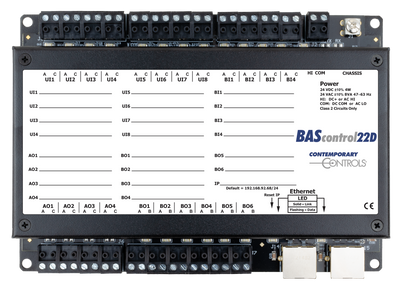
Christian Bourque, Sr. Controls Technologist at Ballard Power Systems, selected a solution built around a Contemporary Controls BASC-22DR BACnet controller, combined with Allen-Bradley Micro800 PLCs and PanelView 800 HMIs, to create an integrated Building Automation and Environmental Control System.
The BASC-22DR served as the system’s integration platform, leveraging Sedona network variable (NETV) components to act as a BACnet/IP client and initiate BACnet/IP communication without a head-end system.
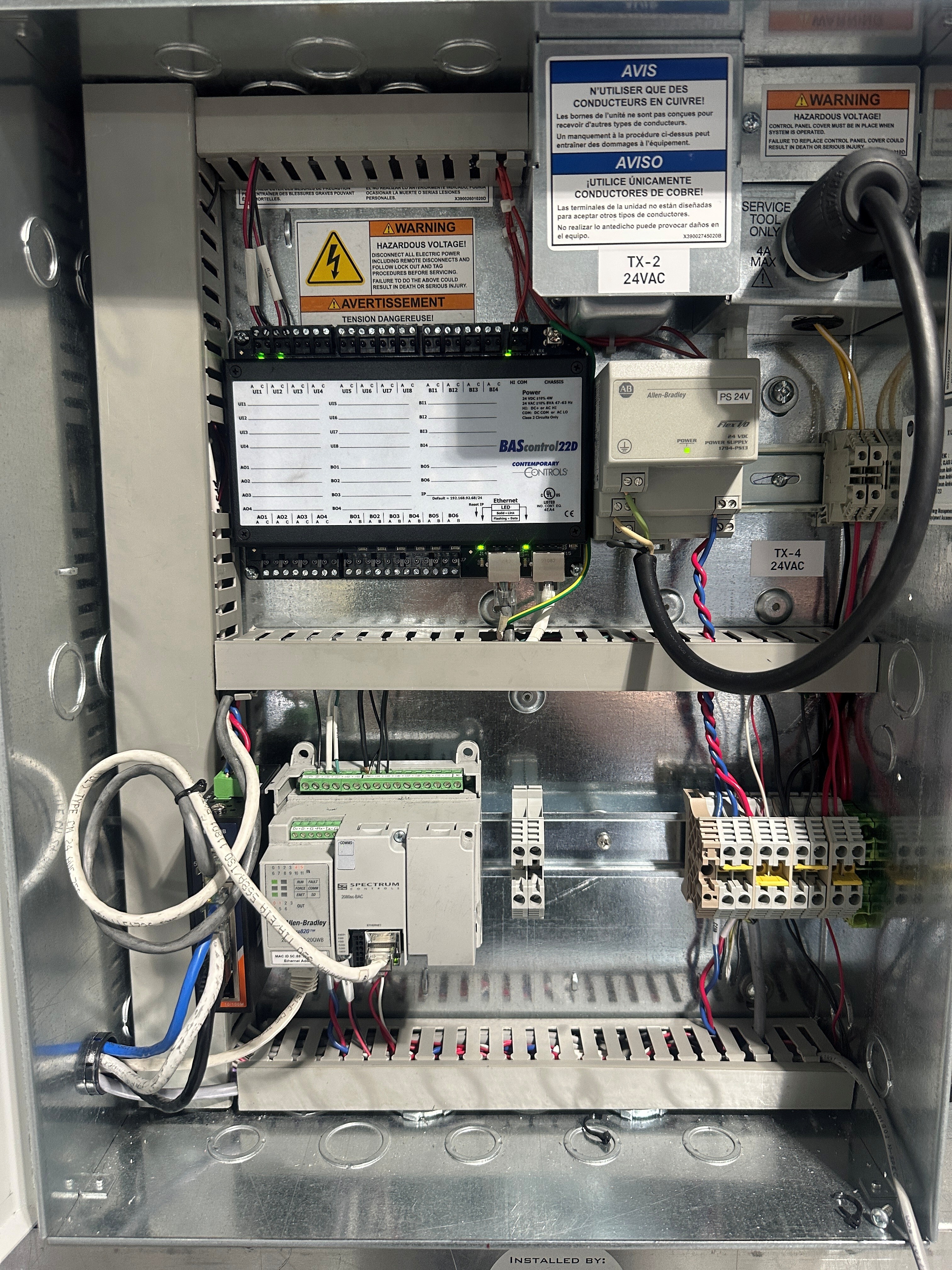
Each clean room was equipped with dedicated temperature and humidity sensors connected directly to the PLCs.
A graphical interface, developed using PanelView 800 HMIs, enabled intuitive operator interaction. An integrated VNC server provided secure remote access, allowing authorized personnel to monitor and adjust settings from off-site.
According to Bourque, the BASC-22DR played a critical role in bridging communication between the dehumidifiers and the PLC-based control system. Its ability to simultaneously support BACnet/IP communications and custom integration strategies allowed the project team to create a flexible, scalable architecture without the need for additional protocol conversion hardware.
The use of NETV components simplified configuration, enabling rapid deployment and commissioning while maintaining the reliability required for clean room applications.
"Diego Mateo from Contemporary Controls’ Technical Support instilled confidence that this project would come together as expected, and it met all expectations,” said Bourque. “The support and expertise he provided throughout the project helped ensure a successful deployment."
The completed system delivered precise environmental control while reducing the complexity of managing multiple independent systems. It successfully integrated multiple HVAC and control technologies into a unified platform.
To learn more, read the full success story.